Filter by

Global warming
Earth gets most of its heat from the sun. The sun's energy travels through space and enters Earth's atmosphere. Some of this energy is reflected back into space by the atmosphere and clouds, and some of it is absorbed and stored as heat by Earth's surface. When the surface and atmosphere become warm, they radiate heat back into space. This helps keep Earth from becoming too hot or too cold.
- Edition
- -
- ISBN/ISSN
- 9781599053493
- Collation
- 65 pages : illustration ; 25 cm
- Series Title
- Think Green
- Call Number
- 363.7 GLO
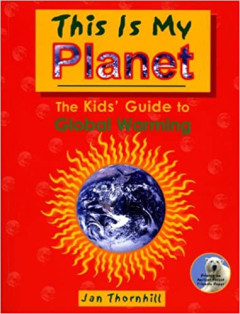
This is my planet : the kids guide to global warming
Reports of global warming’s catastrophic effects are everywhere: in newspapers, on the nightly news, even on movie screens. The subject can be so overwhelming that young people are often left with the thought, What can I do? In This Is My Planet, Jan Thornhill gives young readers the tools they need to live their own lives more ecologically — and ultimately, to improve the life of the plane…
- Edition
- -
- ISBN/ISSN
- 9781897349076
- Collation
- 64 pages : illustration ; 26 cm
- Series Title
- -
- Call Number
- 363.7 THO
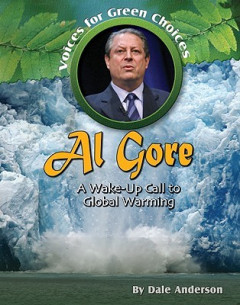
Al Gore : a wake-up call to global warming
Politician Al Gore has lent both his voice and his political influence in the fight against global warming. His work and creative energy have earned him numerous forms of public recognition, most notably the 2007 Nobel Peace Prize.
- Edition
- -
- ISBN/ISSN
- 9780778746799
- Collation
- 48 pages : illustration ; 23 cm
- Series Title
- Voices for Green Choices
- Call Number
- 363.7 AND
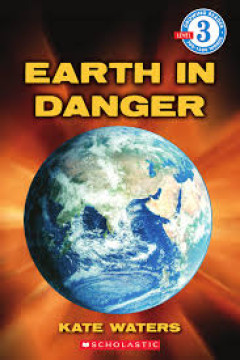
Earth in danger
Readers will learn about carbon footprints, the greenhouse effect, and global warming in this easy to follow text.
- Edition
- -
- ISBN/ISSN
- 9780545072311
- Collation
- 32 pages : illustration ; 23 cm
- Series Title
- Growing Readers Level 3
- Call Number
- 363.7 WAT
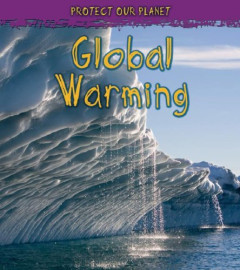
Global warming
What is global warming? How is the weather changing? Which inventions can help to slow down global warming? People are doing things that are putting our planet in danger. Discover what they are doing and how other people are trying to make things better. Every person can make a difference. Find out what you can do to help protect our planet.
- Edition
- -
- ISBN/ISSN
- 9781432909307
- Collation
- 32 pages : illustration ; 22 cm
- Series Title
- Protect Our Planet
- Call Number
- 363.7 ROY
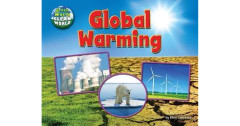
Global warming
What are fossil fuels, and why is it a bad thing to use them? How are greenhouse gases damaging our planet? What is global warming, and how is it changing Earth? How can switching off a light or walking instead of riding in the car help solve the problem? Global Warming introduces young readers to the problems connected to the use of fossil fuels, the creation of greenhouse gases, and the chang…
- Edition
- -
- ISBN/ISSN
- 9781627241045
- Collation
- 24 pages : illustration ; 21 cm
- Series Title
- Green World Clean World
- Call Number
- 363.738 LAW
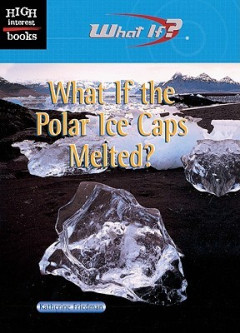
What if the polar ice melted?
Discusses the environmental effects of the melting of the polar ice caps.
- Edition
- -
- ISBN/ISSN
- 9780516234779
- Collation
- 48 pages : illustration ; 21 cm
- Series Title
- What If?
- Call Number
- 363.7 FRI
 Computer Science, Information & General Works
  Philosophy & Psychology
  Religion
  Social Sciences
  Language
  Pure Science
  Applied Sciences
  Art & Recreation
  Literature
  History & Geography