Filter by
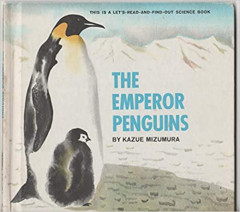
The emperor penguins
I went to the zoo and saw the emperor penguins. They stood on their short legs. They were black and white with a small marking of yellow on their heads. The penguins were in a cold room at the zoo because they come from Antarctica, one of the coldest parts of the earth. They had a swimming pool because penguins spend much of their time in the water.
- Edition
- -
- ISBN/ISSN
- 0713611464
- Collation
- 35 pages : illustration ; 20 cm
- Series Title
- This is a let's read and find out book
- Call Number
- 598.4 MIZ
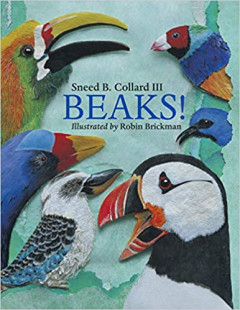
Beaks!
Young naturalists explore a variety of birds, their habitats, and how their beaks help them build, eat, and survive. From the twisted beak of a crossbill to the color changing bill of a seagull, readers will learn fun facts about how beaks are designed and used as tools by birds of all shapes and sizes. Bright, bold cut-paper illustrations create amazingly realistic tableaus of birds in their…
- Edition
- -
- ISBN/ISSN
- 9781404680098
- Collation
- 32 pages : illustration : 28 cm
- Series Title
- -
- Call Number
- 598 COL
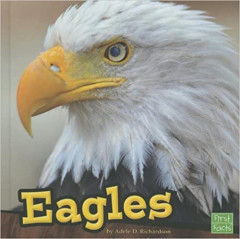
Eagles
Eagles are a symbol of national pride, but they are also fierce hunters. Come soar through the skies with this majestic bird, and uncover the features that make it a top predator.
- Edition
- -
- ISBN/ISSN
- 9781429686839
- Collation
- 24 pages : illustration ; 20 cm
- Series Title
- -
- Call Number
- 598 RIC
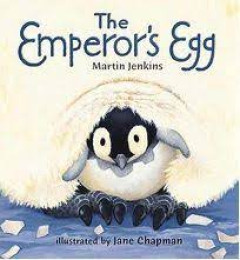
The emperor's egg
"Students who are wild about penguins and classrooms doing units on them will find THE EMPEROR'S EGG an action-packed read." - SCHOOL LIBRARY JOURNAL Can you imagine spending the winter outdoors in Antarctica without anything at all to eat? That’s just what the male Emperor penguin does. While his mate is off swimming in the ocean and catching loads of fish, he stands around in the freezin…
- Edition
- -
- ISBN/ISSN
- 0439188067
- Collation
- 29 pages : illustration ; 25 cm
- Series Title
- -
- Call Number
- 598.4 JEN
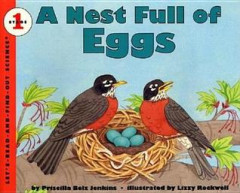
A nest full of eggs
What's inside that pretty blue egg? A baby bird is growing inside that egg. Slowly the bird develops, until one day it cracks through the shell. Safe inside the nest, under the care of its parents, the chick grows stronger. Soon it will learn how to fly and take care of itself. By next spring it will be ready to build its own nest and raise chicks of its own.
- Edition
- -
- ISBN/ISSN
- 9780064451277
- Collation
- 32 pages : illustration : 20 cm
- Series Title
- Lets read and find out science : stage 1
- Call Number
- 598.8 JEN
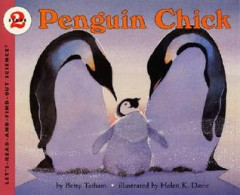
Penguin chick
An emperor penguin lays an egg on the Antarctic ice. In the bitter cold, miles away from the only source of food, how can the chick survive? A father penguin keeps his mate's egg warm by balancing it on his feet for two entire months. Learn how penguin parents take care of their babies in one of Earth's coldest, most desolate environments. This nonfiction picture book is an excellent choice to …
- Edition
- -
- ISBN/ISSN
- 0439454646
- Collation
- 33 pages : illustration ; 20 cm
- Series Title
- Let's-read-and-find-out about
- Call Number
- 598.4 TAT
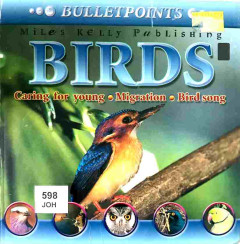
Birds
Explore the magnificent world of birds, from ducks and finches to eagles and ostriches. Discover how they build nests, find food and care for their young. Illustrated in detail, this book is crammed with facts about birds' habitats, anatomy and behavior, as well as how they can be identified. Bulletpoints of information. Accurate illustrations and photographs. Amazing fact panels.
- Edition
- -
- ISBN/ISSN
- 9781842362419
- Collation
- 40 pages : illustration ; 18 cm
- Series Title
- Bulletpoints
- Call Number
- 598 JOH
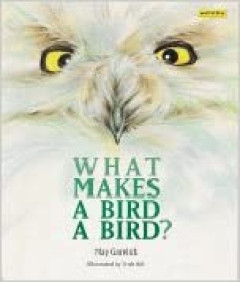
What makes a bird a bird?
An inventive nonfiction format! Using scientific-type inquiry and a friendly, informal tone, May Garelick leads the reader to discover what makes a bird a bird. Packed with accurate, detailed illustrations by Trish Hill as lush and brightly-colored as the birds themselves.
- Edition
- -
- ISBN/ISSN
- 9781572550087
- Collation
- 32 pages : illustration : 23 cm
- Series Title
- -
- Call Number
- 598 GAR
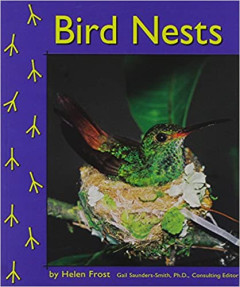
Bird nests
"Baby Birds describes and illustrates the development of young robins from hatching to leaving the nest. The other three titles in the series present information on different types of birds. Readers examine various eggs, nests, and family groupings. The close picture-text matches in this series support early readers. This series explores and supports the standard "The Living Environment: Divers…
- Edition
- -
- ISBN/ISSN
- 9780736881968
- Collation
- 24 pages : illustration ; 17 cm
- Series Title
- -
- Call Number
- 598.1 FRO
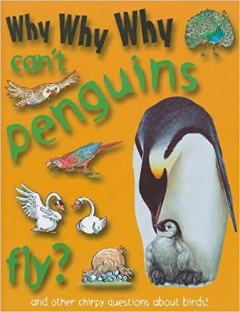
Why why why can't penguins fly? and other chirpy questions about birds!
Take a look inside the pages of this book and discover the answers to loads of interesting questions about birds. You will find fantastic pictures to help explain things more, cartoons to make you giggle, and fun things to do in the colour panels. Specially designed parent panels give tips on further learning. An easy-to-use index helps children to get to grips with finding all the information …
- Edition
- -
- ISBN/ISSN
- 9781422215739
- Collation
- 32 pages : illustration : 30 cm
- Series Title
- -
- Call Number
- 598 WHY
 Computer Science, Information & General Works
  Philosophy & Psychology
  Religion
  Social Sciences
  Language
  Pure Science
  Applied Sciences
  Art & Recreation
  Literature
  History & Geography